


Rapé in Mexico – Sacred Amazonian Tobacco, Spiritual Cleansing & Inner Stillness
Deep within the Amazon rainforest, knowledge of sacred plants has been passed down through generations as part of the spiritual lives of many Indigenous communities.
One of these traditional medicines is Rapé, also known as Hapé or Rapeh.
For certain Amazonian peoples, tobacco represents far more than an ordinary plant. It is part of prayer, spiritual connection, cleansing rituals, and a profound relationship between human beings and nature.
Within these traditions, Rapé may be associated with intention, concentration, inner stillness, and a return to the present moment.
In today’s world, our minds are almost constantly occupied. We think about the past, imagine the future, and often forget to truly experience the present.
For this reason, a traditional Rapé ceremony may hold deep spiritual meaning for some people.
Not as a way to escape life, but as an invitation to return to ourselves.
Because sometimes we do not need to search for more answers. We need to learn how to listen to the silence within us.
What Is Rapé?
Rapé is a traditional Amazonian preparation made into a fine powder and used in ceremonies by certain Indigenous communities of South America.
It is commonly prepared from finely ground tobacco and plant ashes. Some blends may also contain other botanical ingredients.
A frequently used tobacco species is Nicotiana rustica, known in some South American traditions as Mapacho.
The composition of Rapé varies depending on the community, tradition, and preparation method.
In traditional contexts, Rapé is more than a mixture of plants. Its significance may also involve intention, prayer, respect for nature, and the way it is used.
Rapé is not a classical psychedelic. Its effects differ from those of ayahuasca or psilocybin.
Nevertheless, for some individuals, it may become part of a meaningful personal and spiritual experience.
The Origins of Rapé and the Wisdom of Amazonian Peoples
The ceremonial use of tobacco has a long history in many regions of the Americas.
In the Amazon, tobacco is part of the spiritual and cultural lives of various Indigenous communities.
Rapé is associated with traditions of peoples such as the Huni Kuin, Yawanawá, Katukina, and other Amazonian communities.
Each people has its own methods of preparation, use, and understanding of this medicine.
It is therefore important to respect the diversity of these traditions rather than presenting Rapé as one universal spiritual practice.
In certain communities, tobacco is regarded as a sacred plant associated with prayer, protection, concentration, and spiritual guidance.
Traditional plant practices often emerge from a deep relationship with nature.
In many Indigenous worldviews, human beings are not separate from nature. They are part of it.
Forests, rivers, animals, and plants are not merely the surroundings in which we live, but part of a wider world of relationships, respect, and mutual responsibility.
This relationship with nature is one of the important teachings that Amazonian traditions may remind us of.
Sacred Tobacco and Its Spiritual Meaning
In certain Amazonian traditions, tobacco holds an important place among sacred plants.
It may be associated with prayer, intention, and spiritual concentration.
Within traditional spiritual understanding, it can be part of expressing respect for nature, ancestors, and the spiritual world.
Rapé is also associated with cleansing in some traditions.
Yet spiritual cleansing does not necessarily have to mean removing something unwanted.
It may symbolize the conscious release of what we no longer wish to carry.
Old beliefs.
Unnecessary inner tension.
The constant need for control.
Or the endless noise of the mind.
In this sense, a ceremony may offer an opportunity to pause and consciously observe what is happening within us.
Sometimes the greatest change is not gaining something new, but recognizing what we no longer need to carry.
How Is a Traditional Rapé Ceremony Practiced?
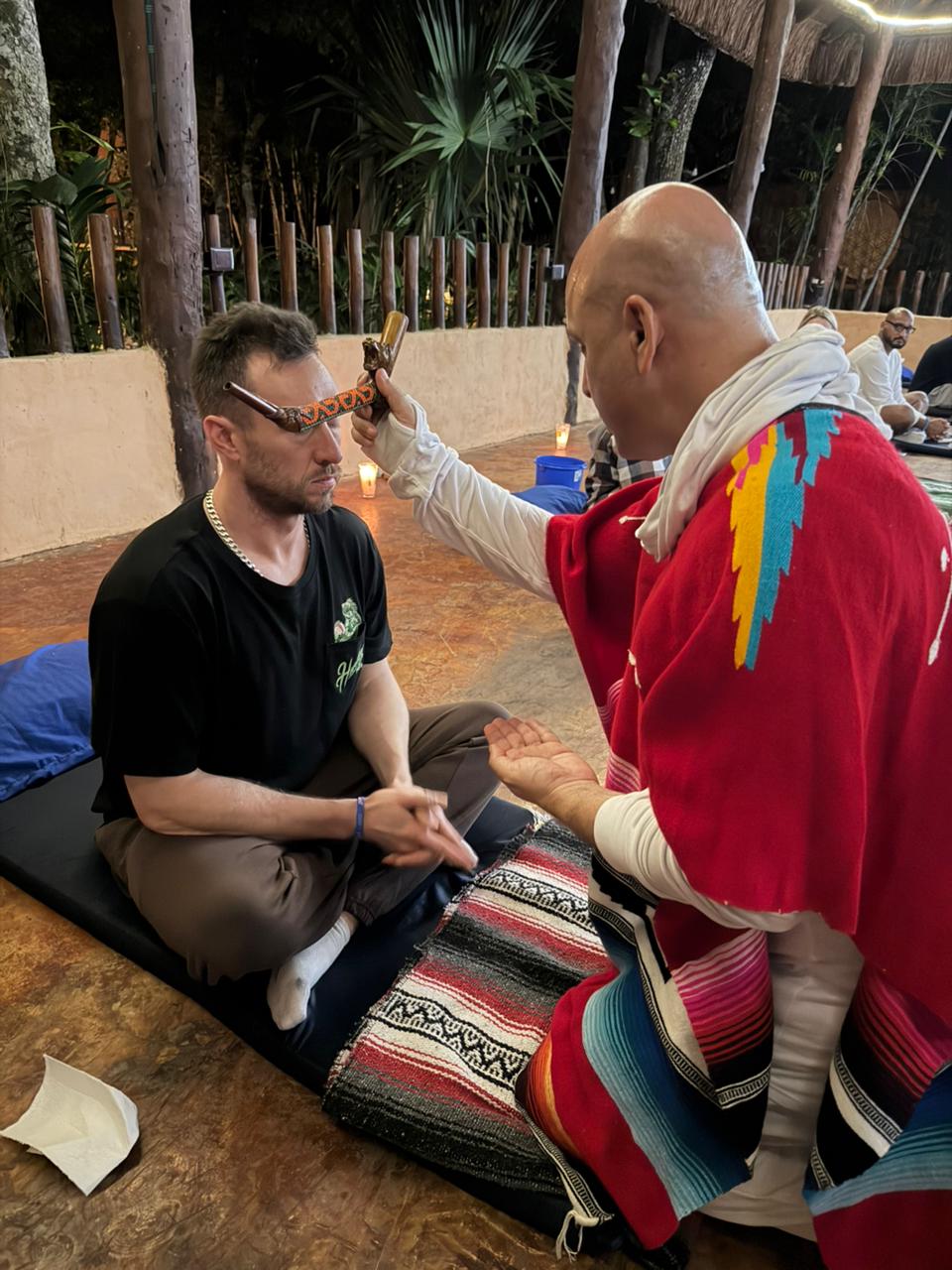
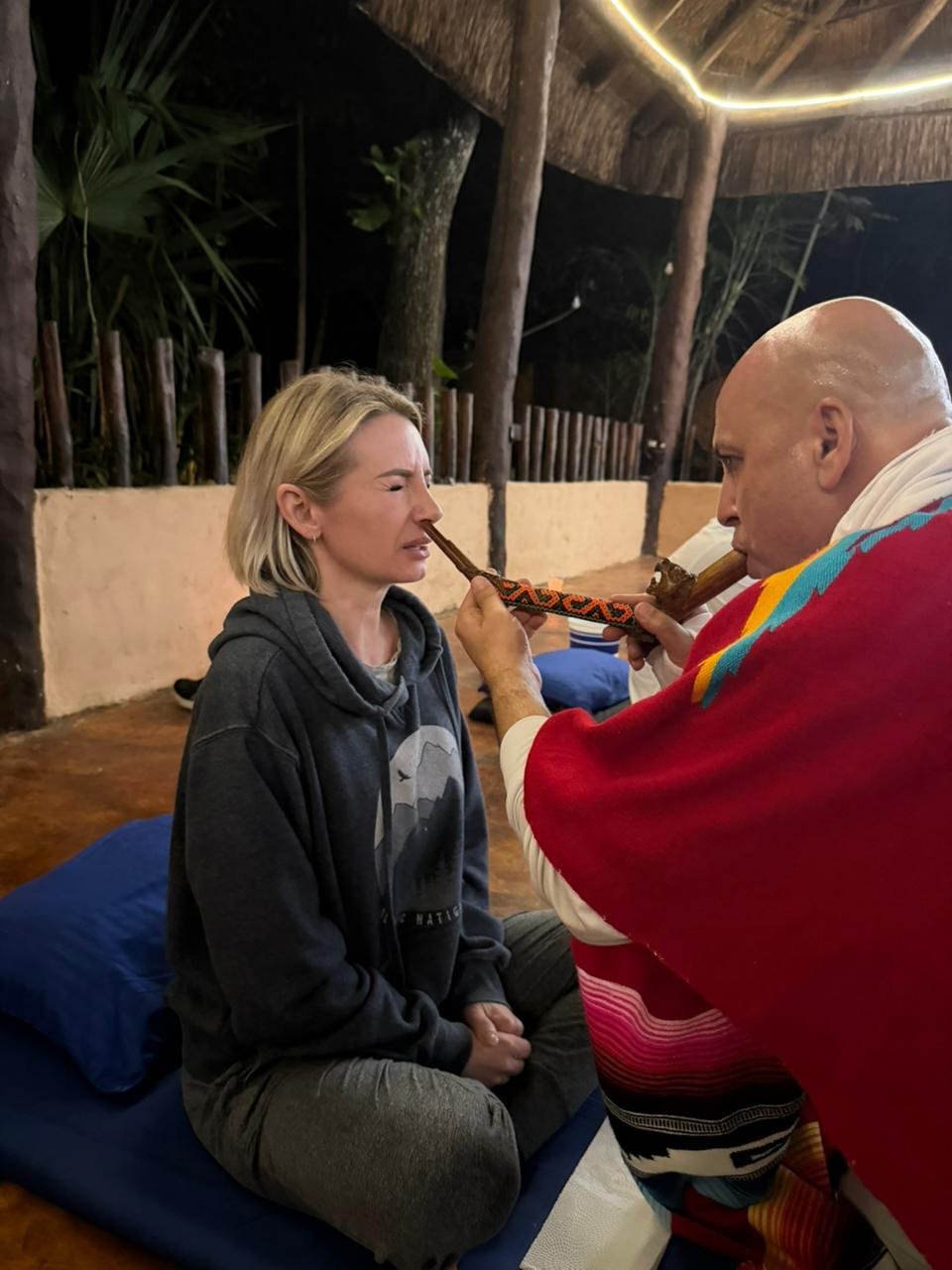
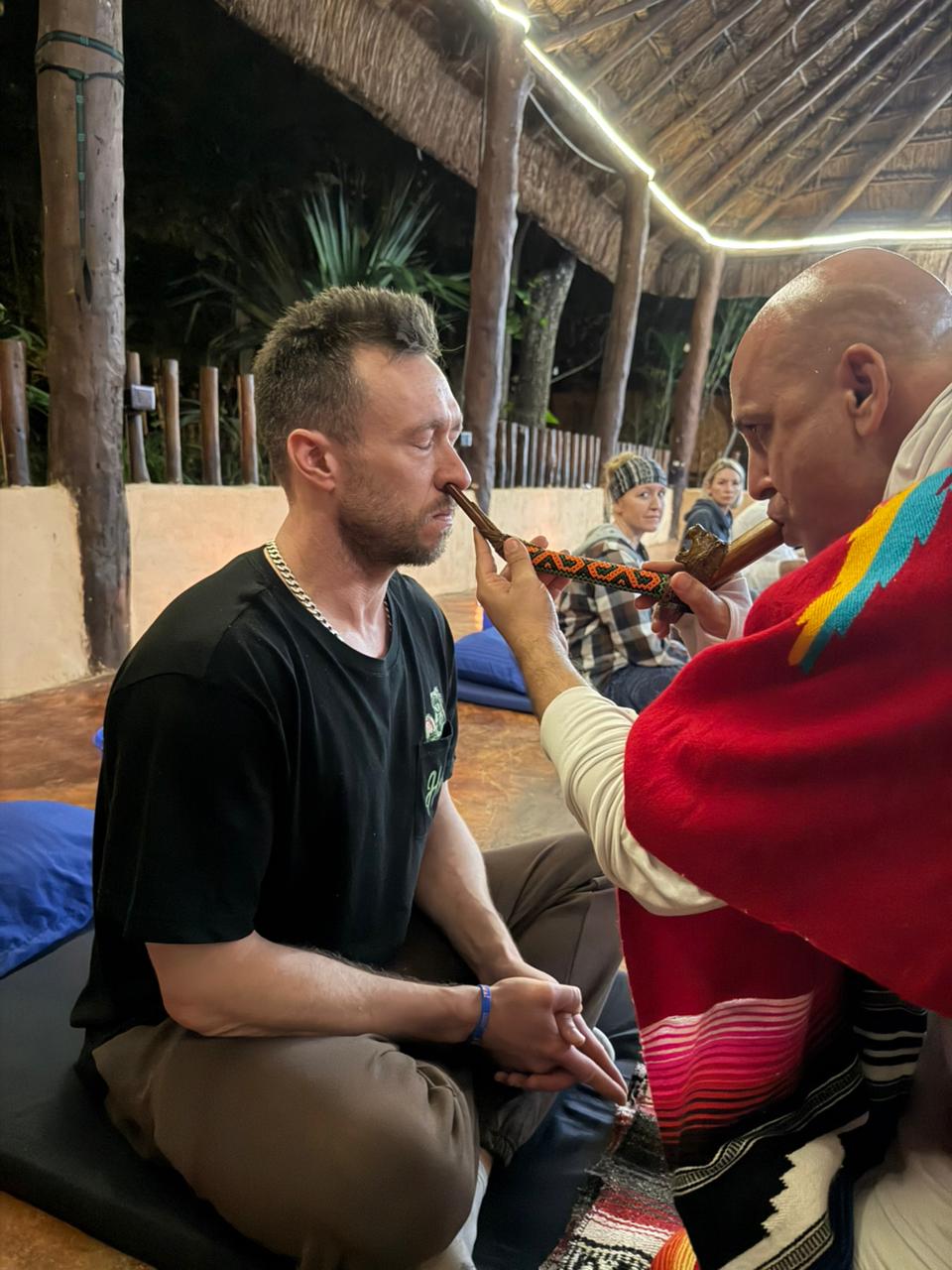
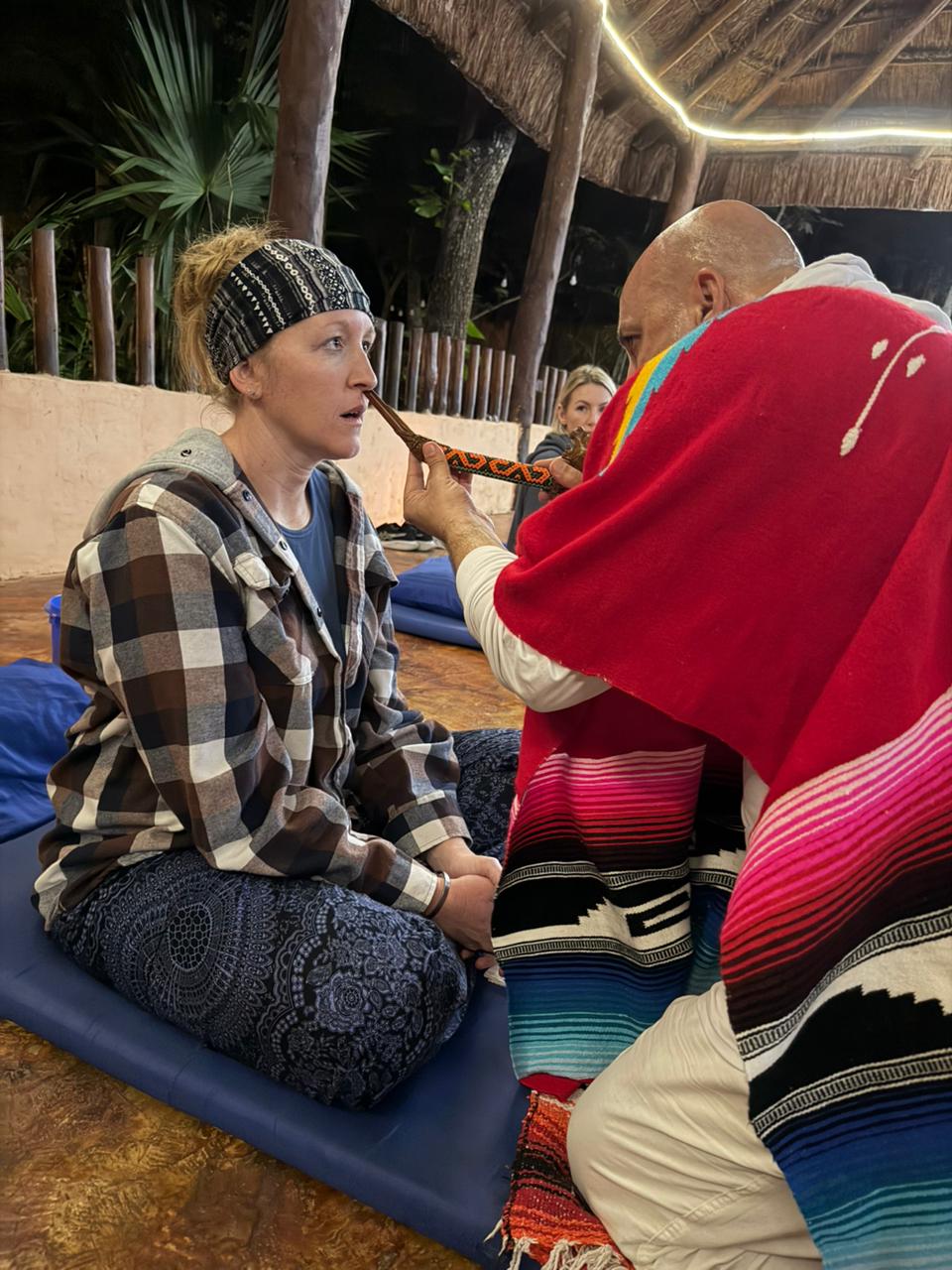
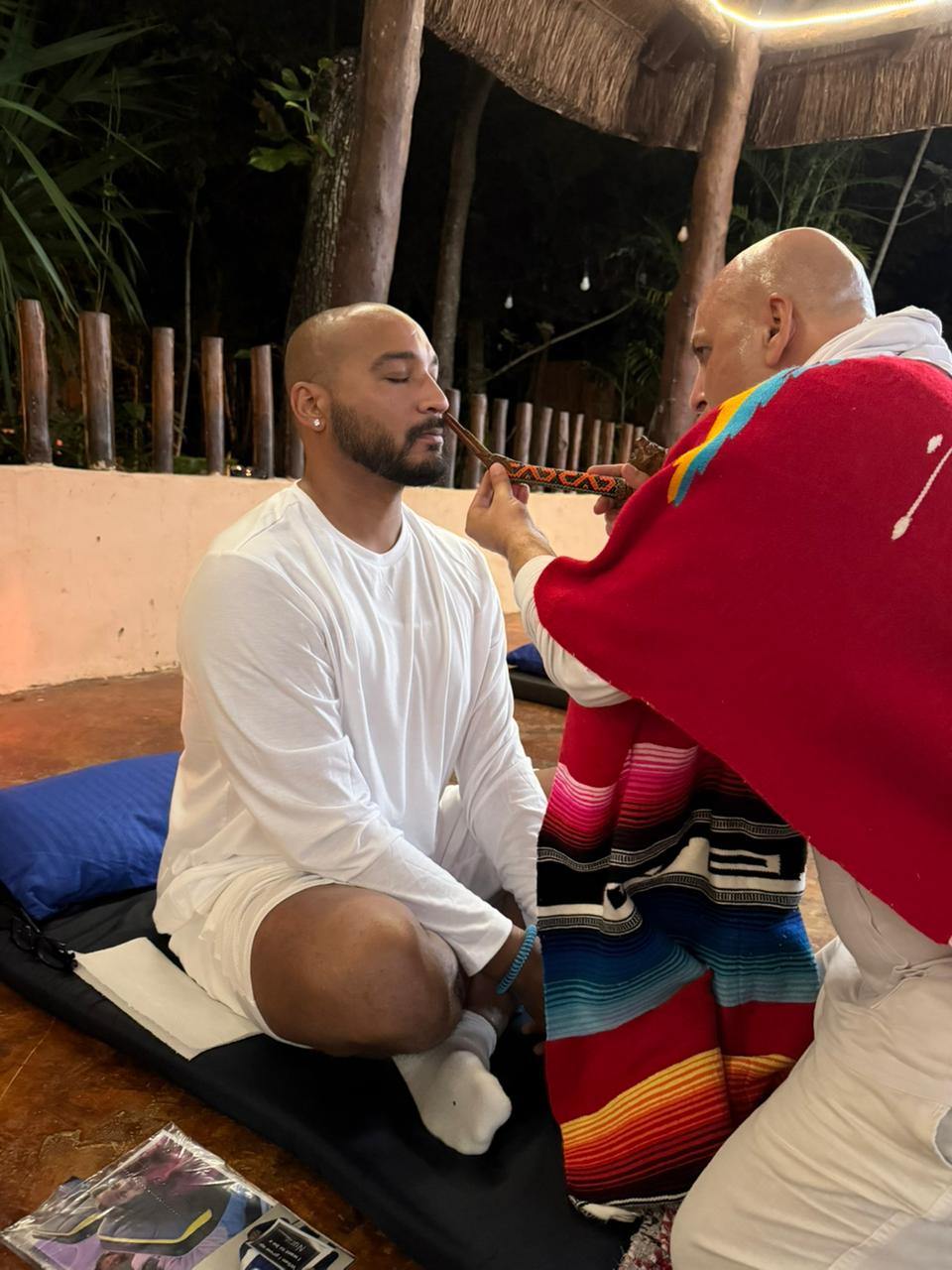
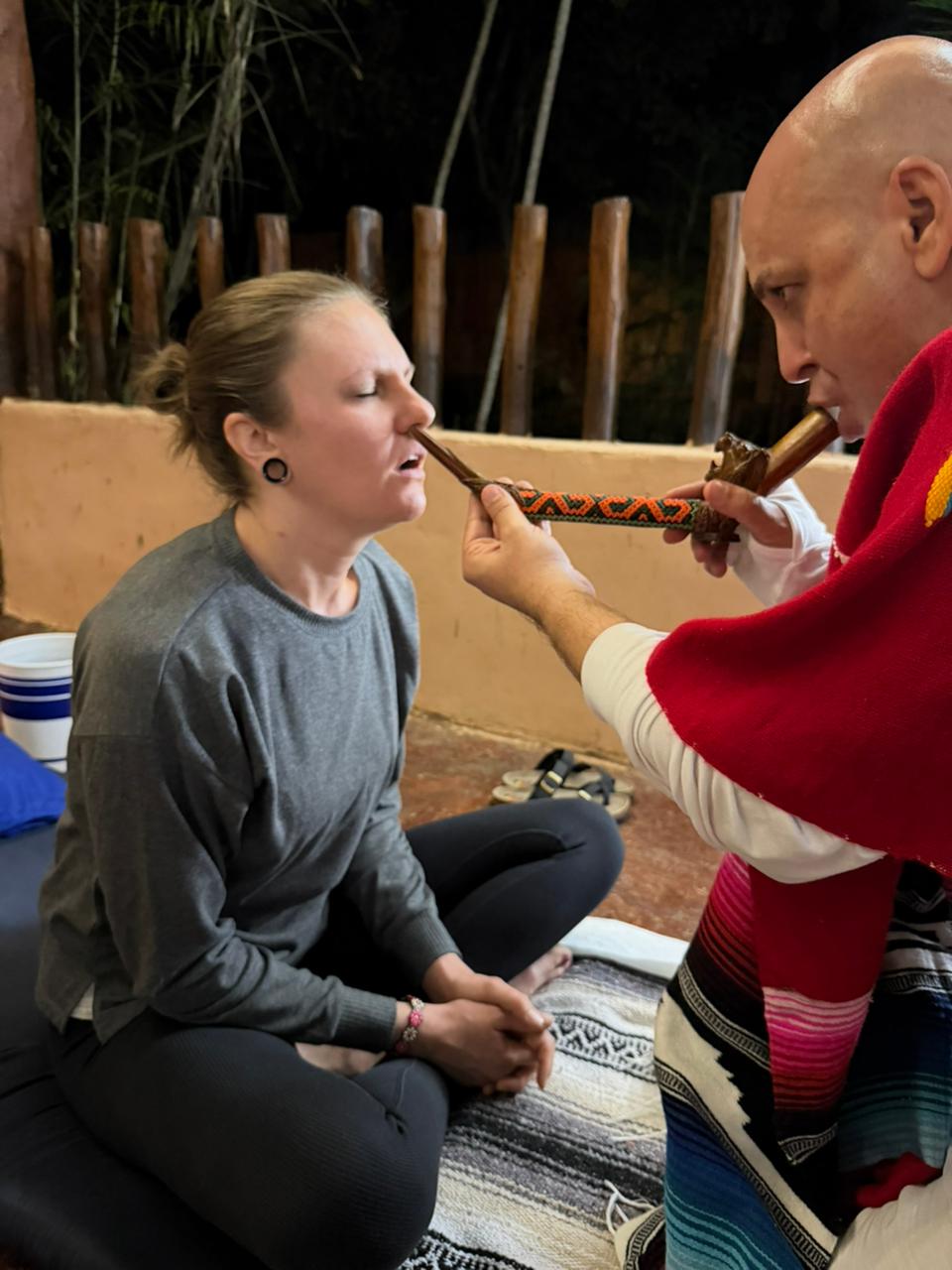
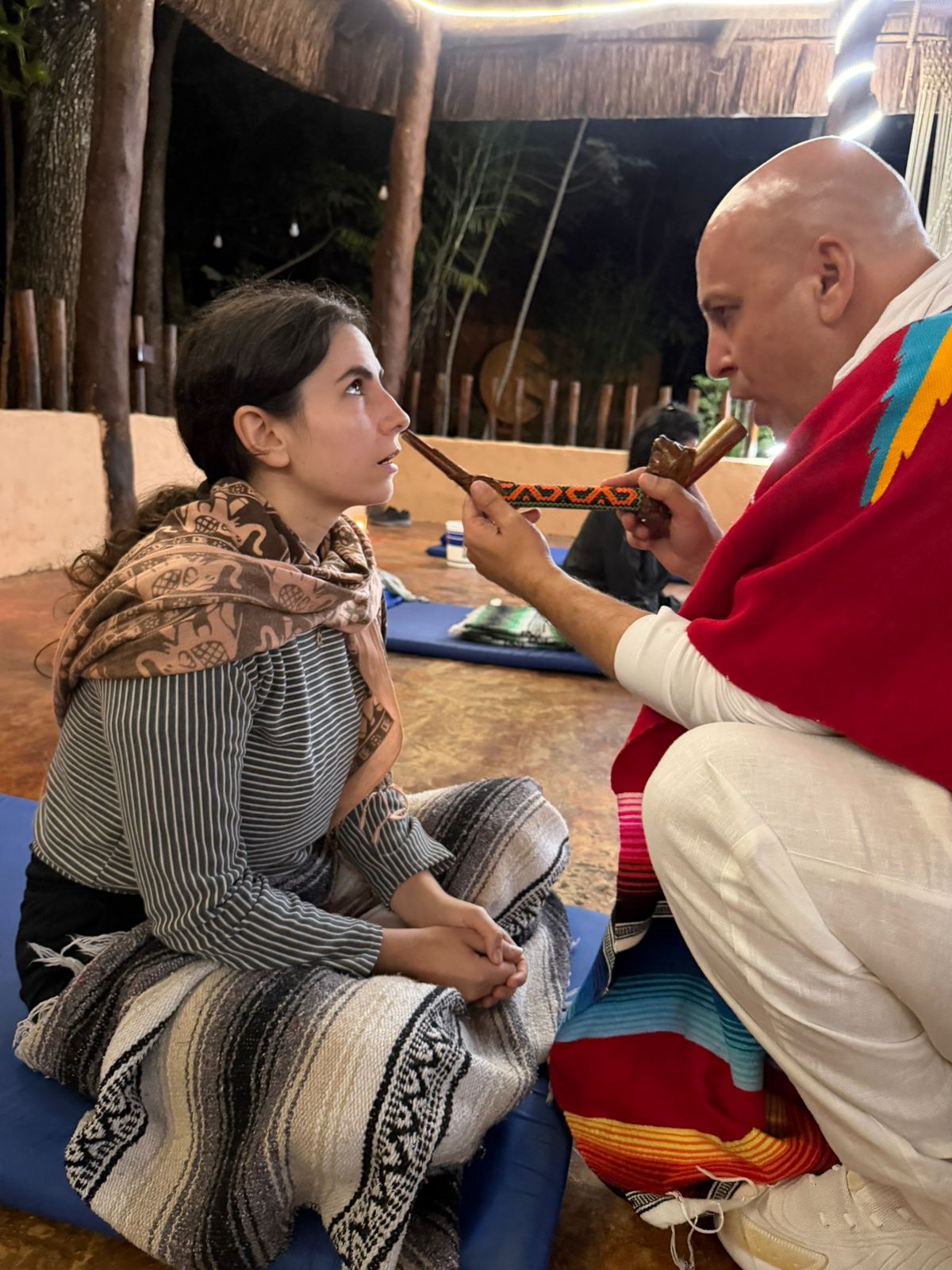
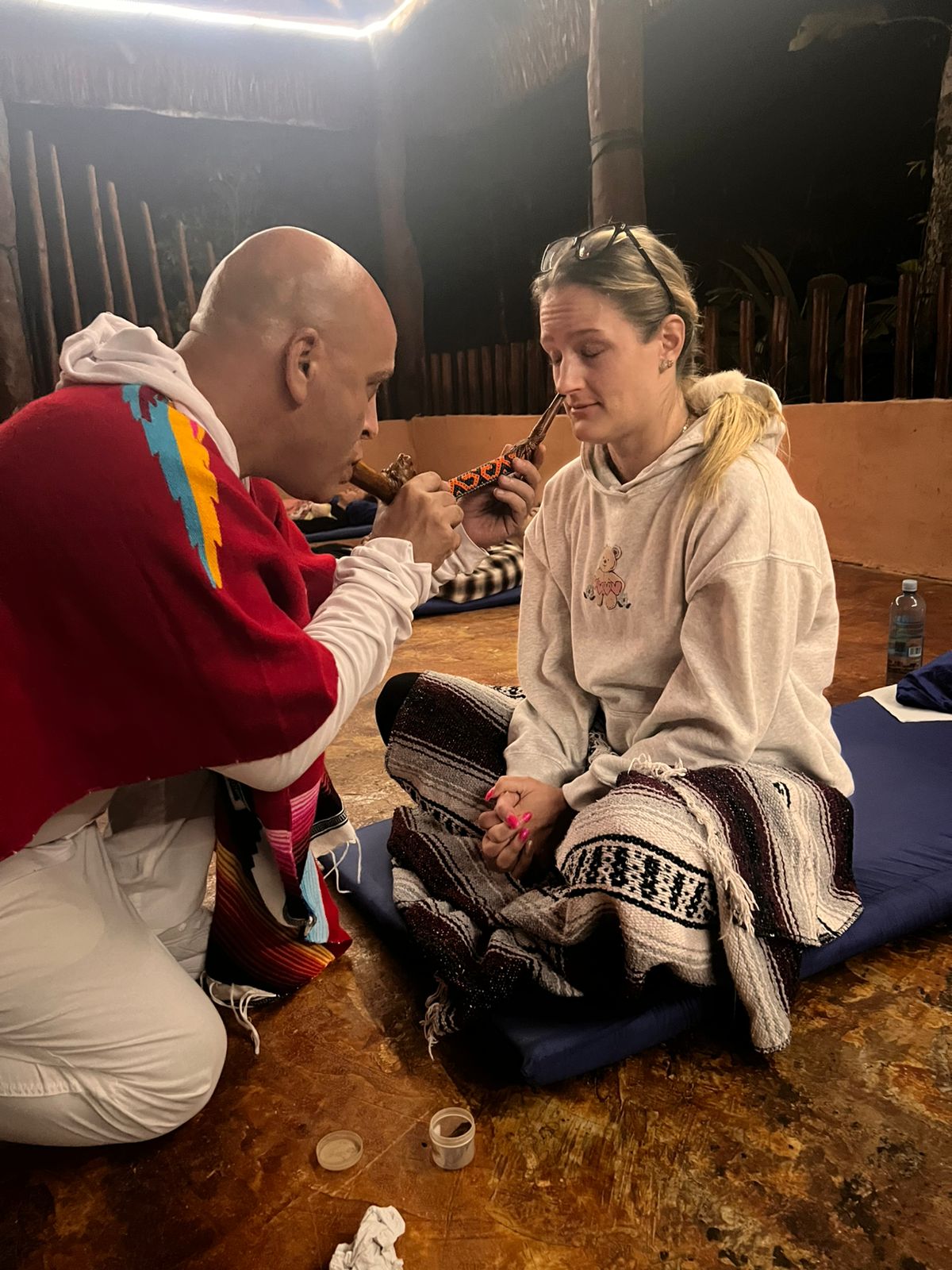
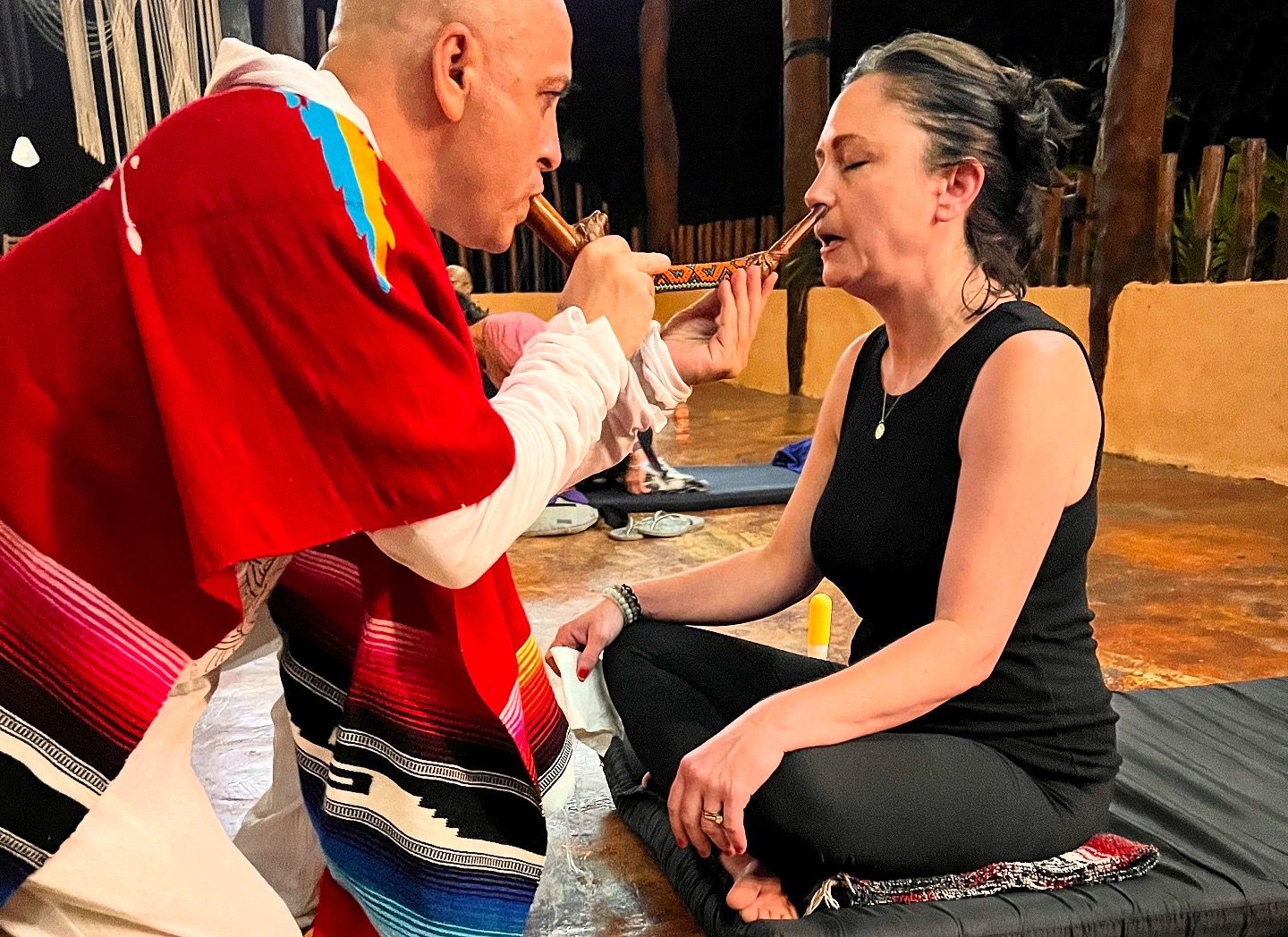
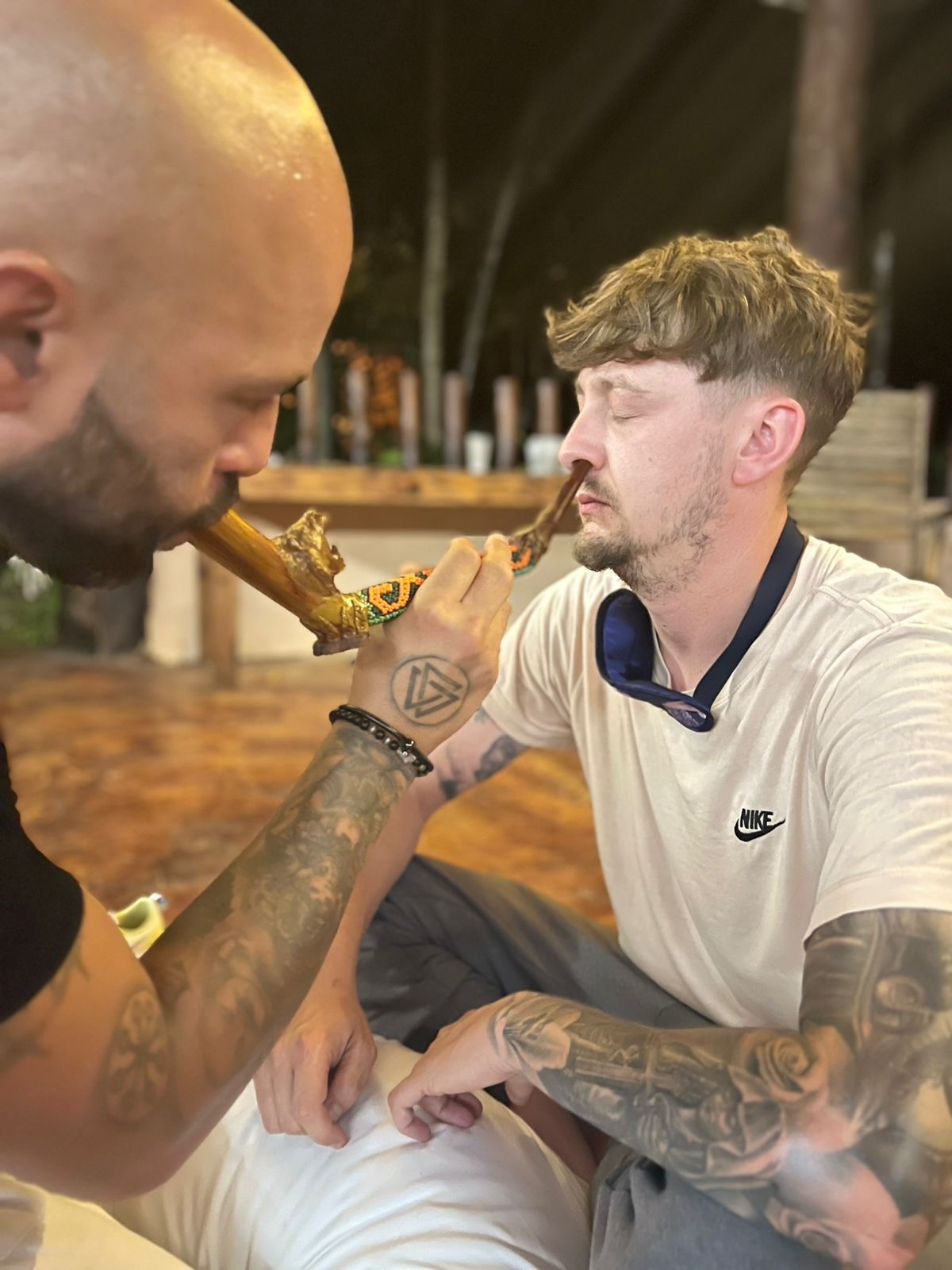
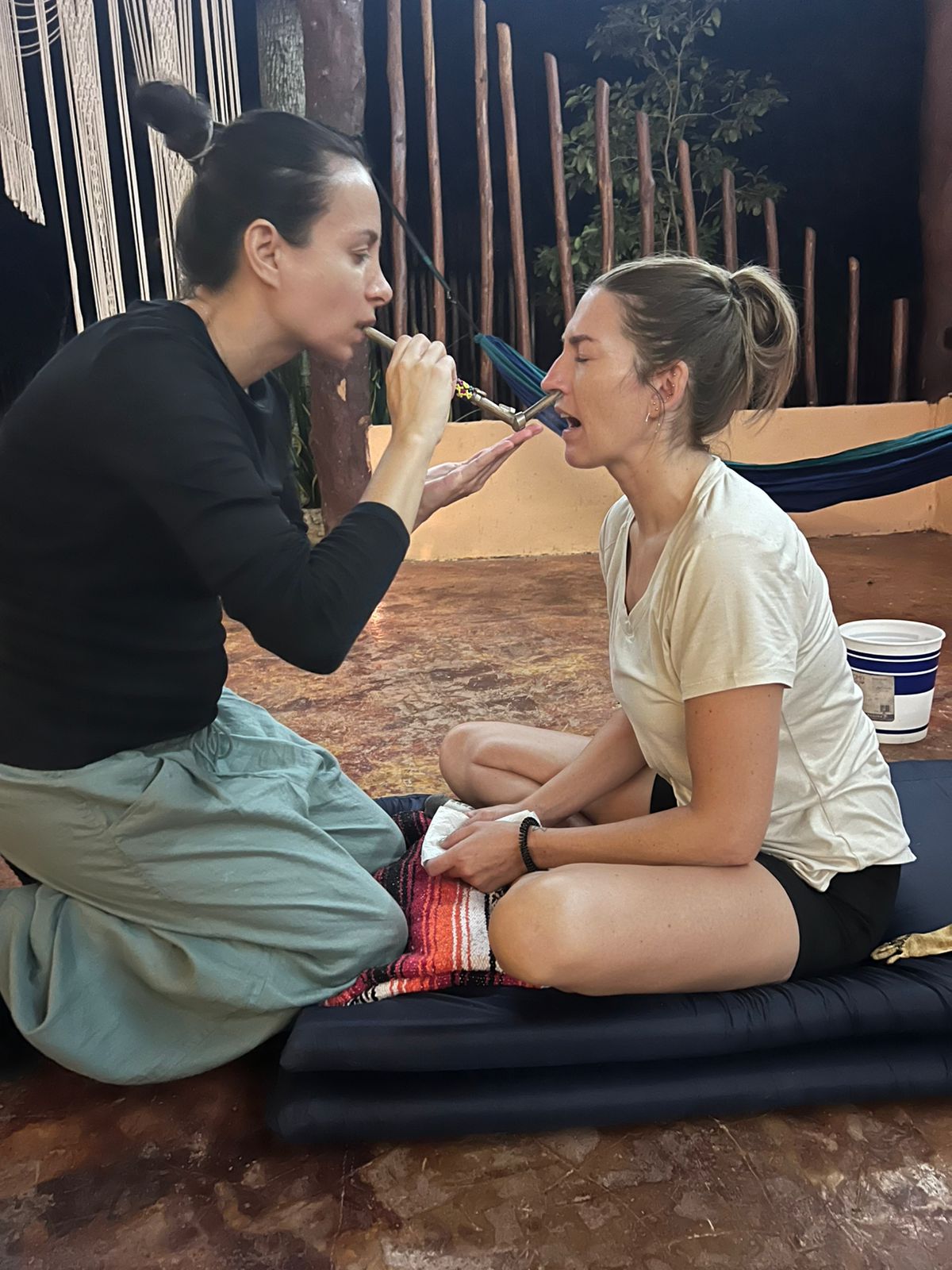
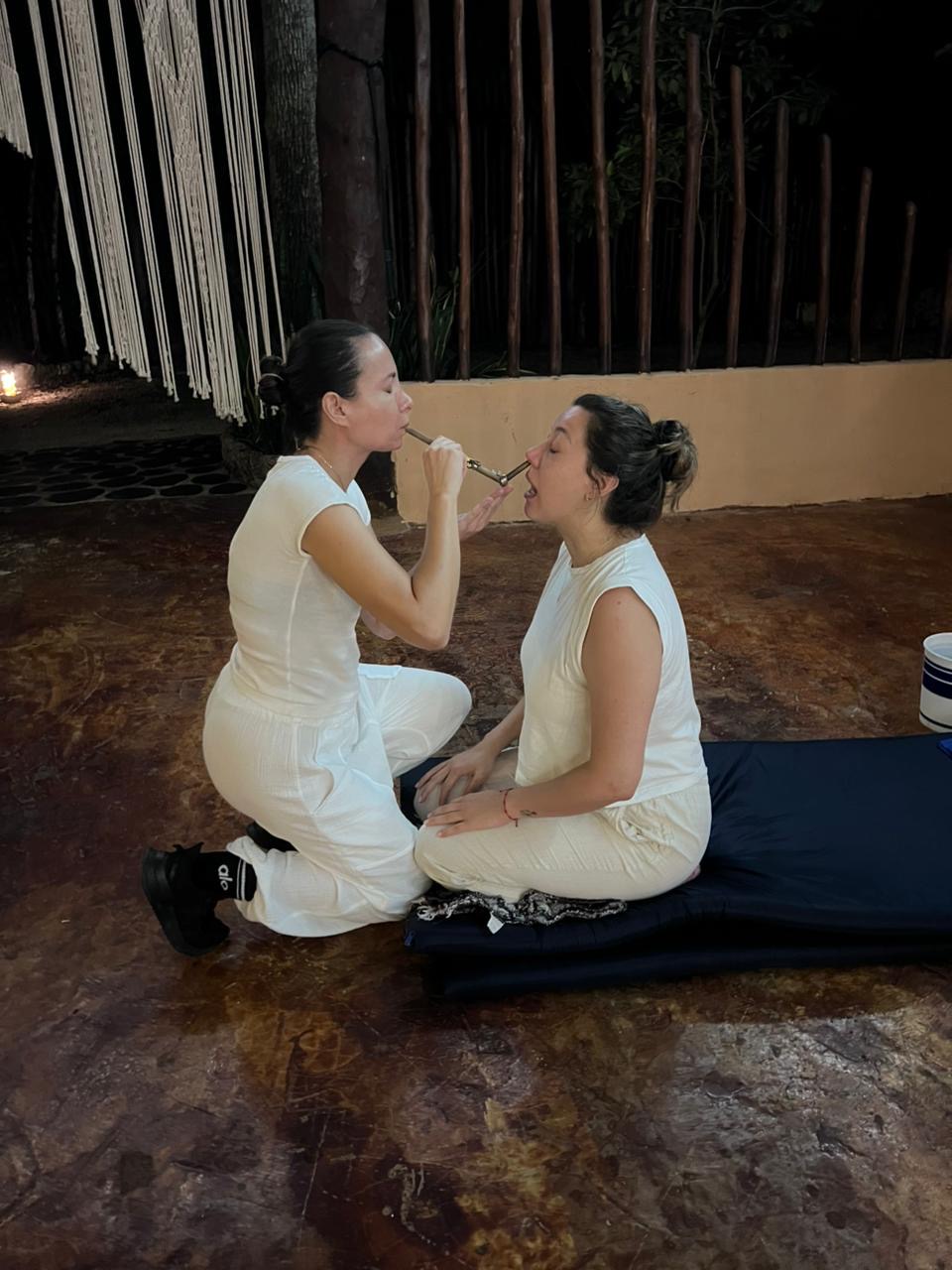
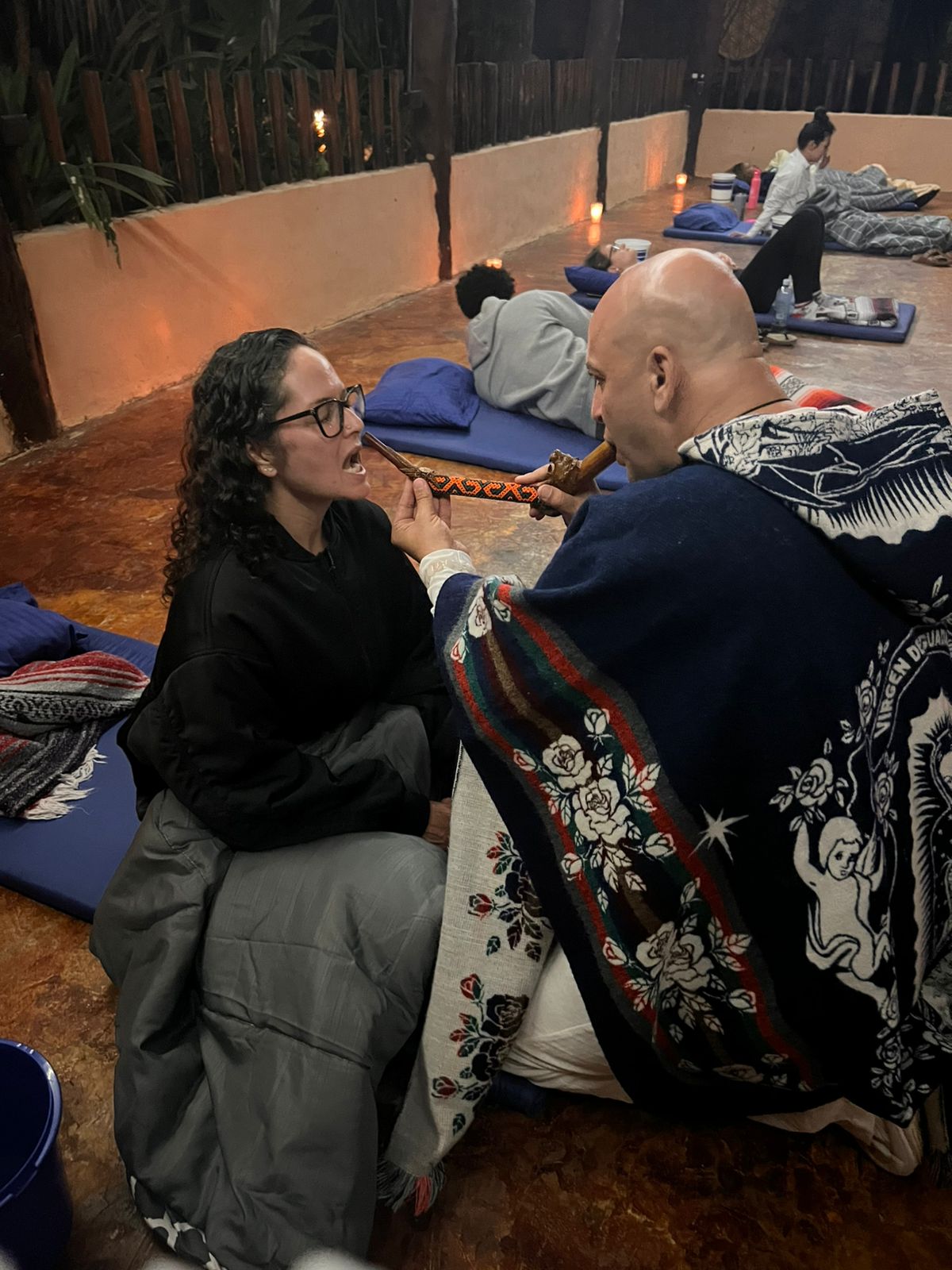
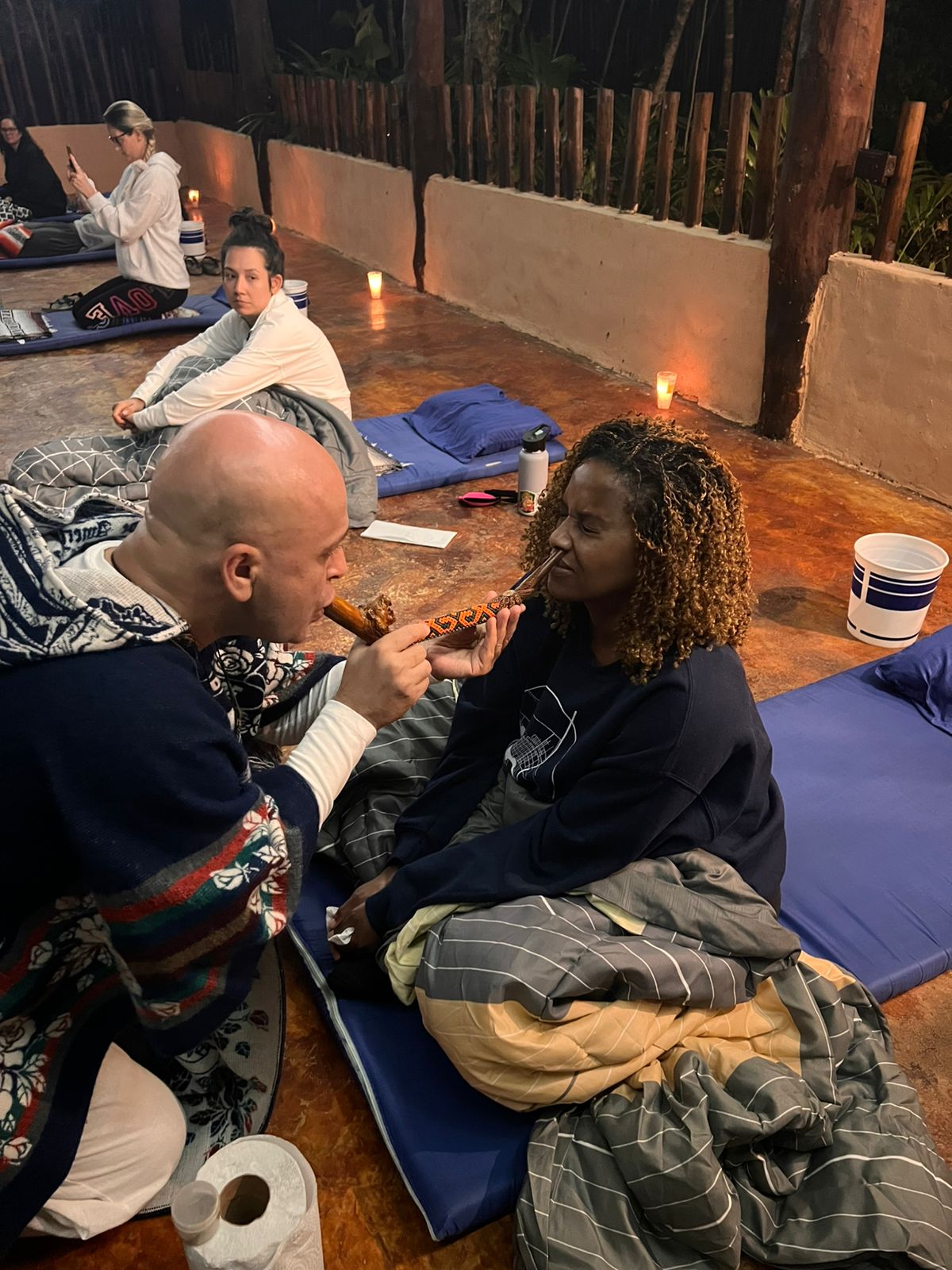
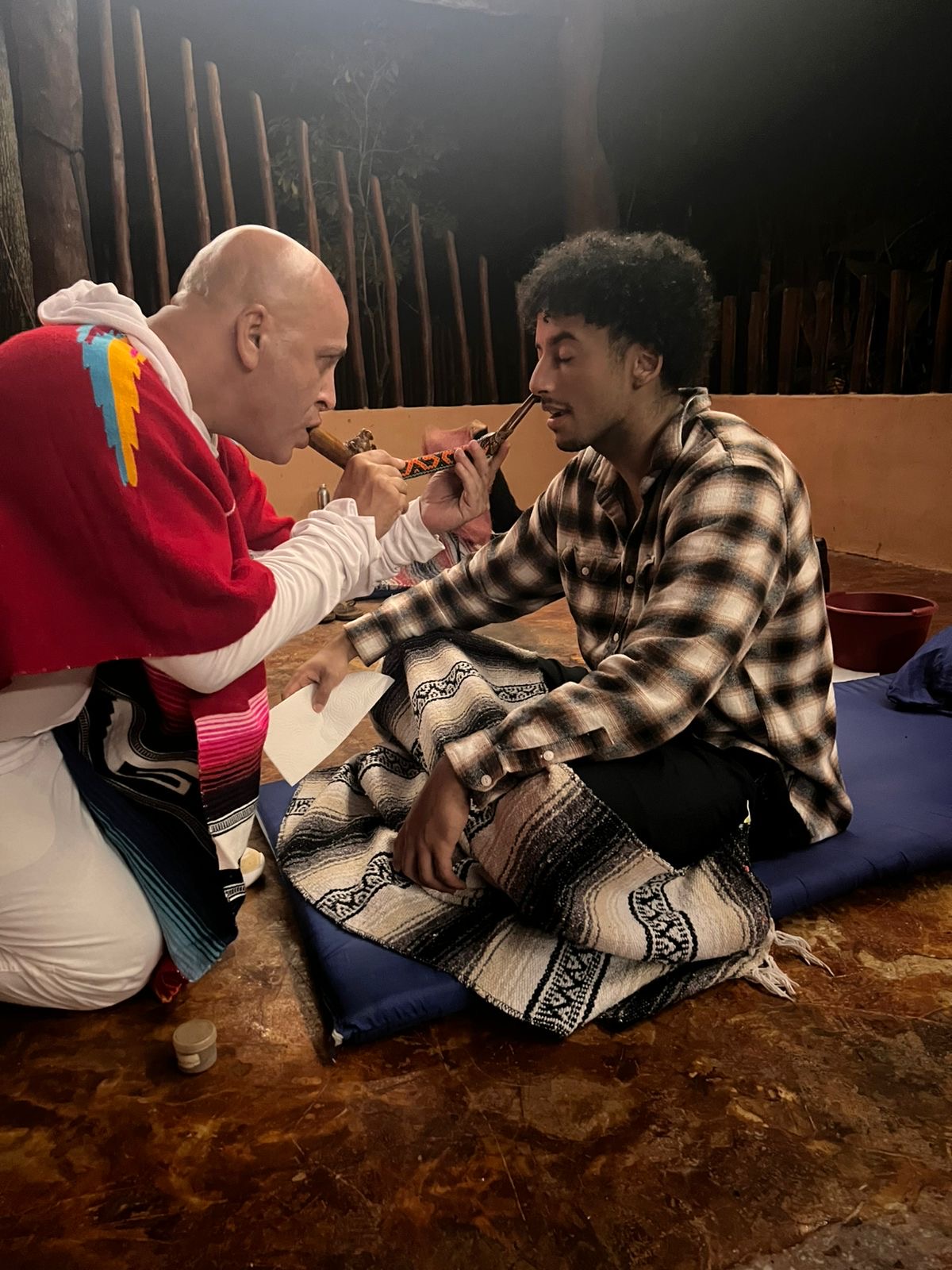
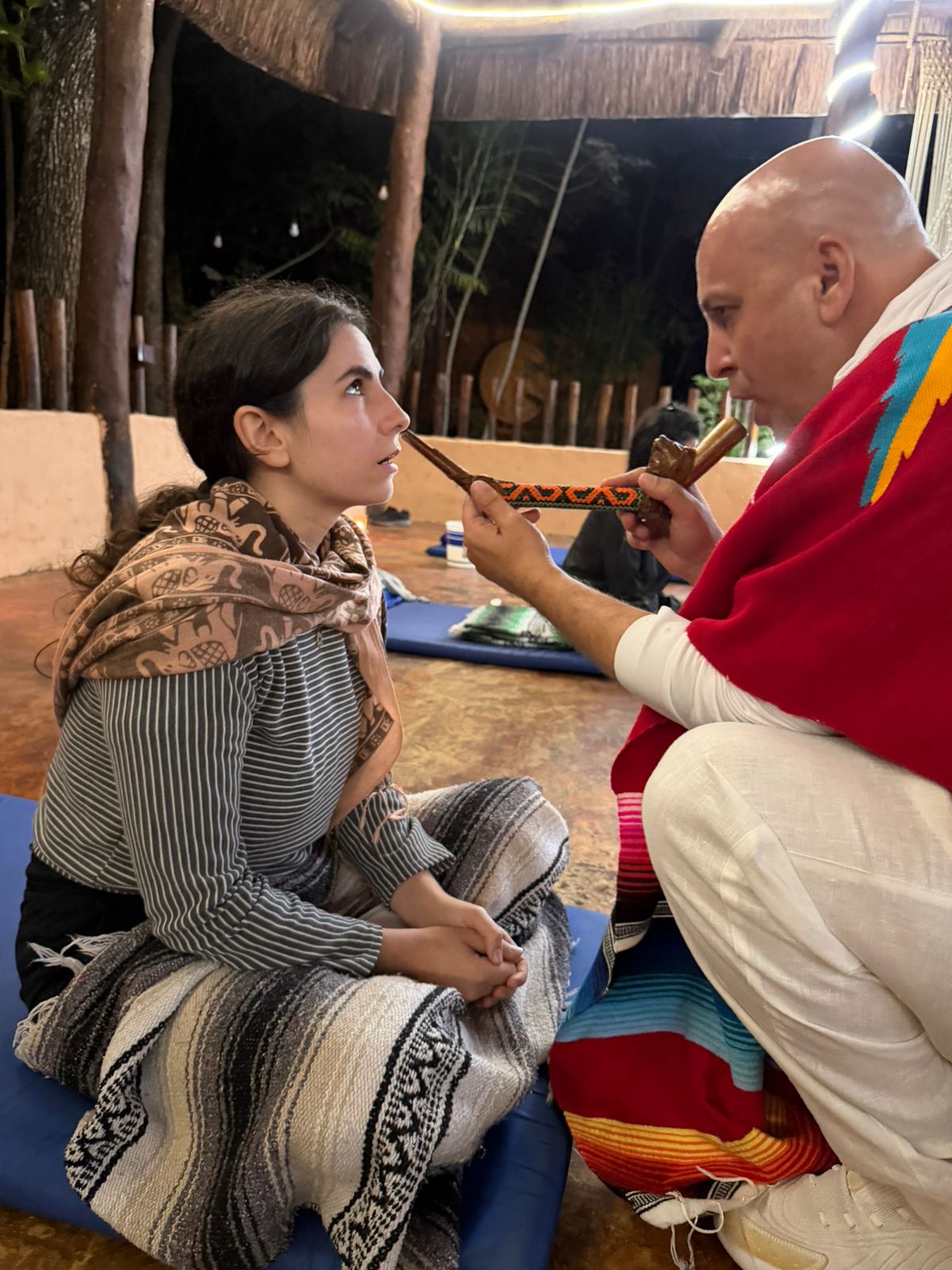
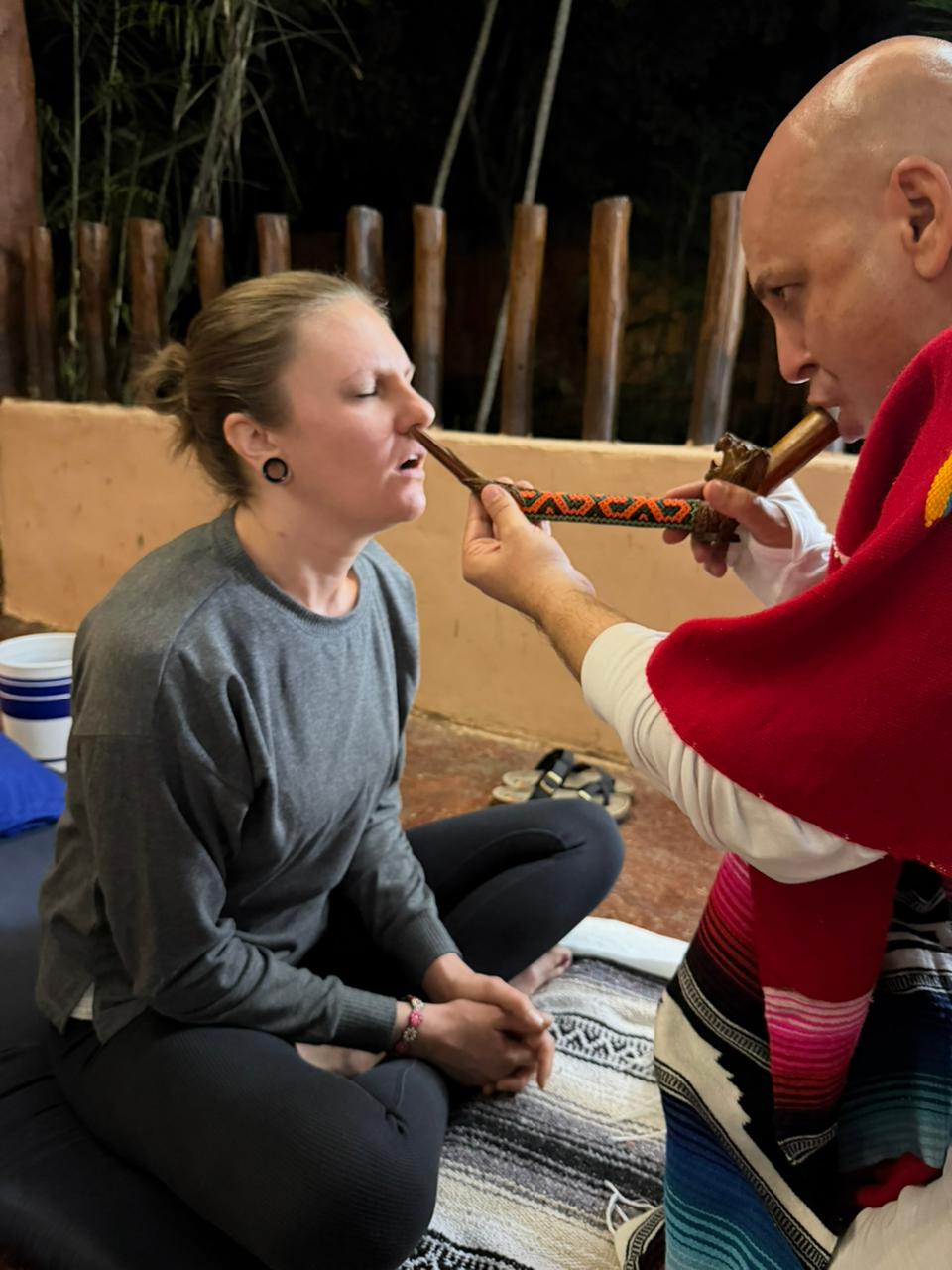
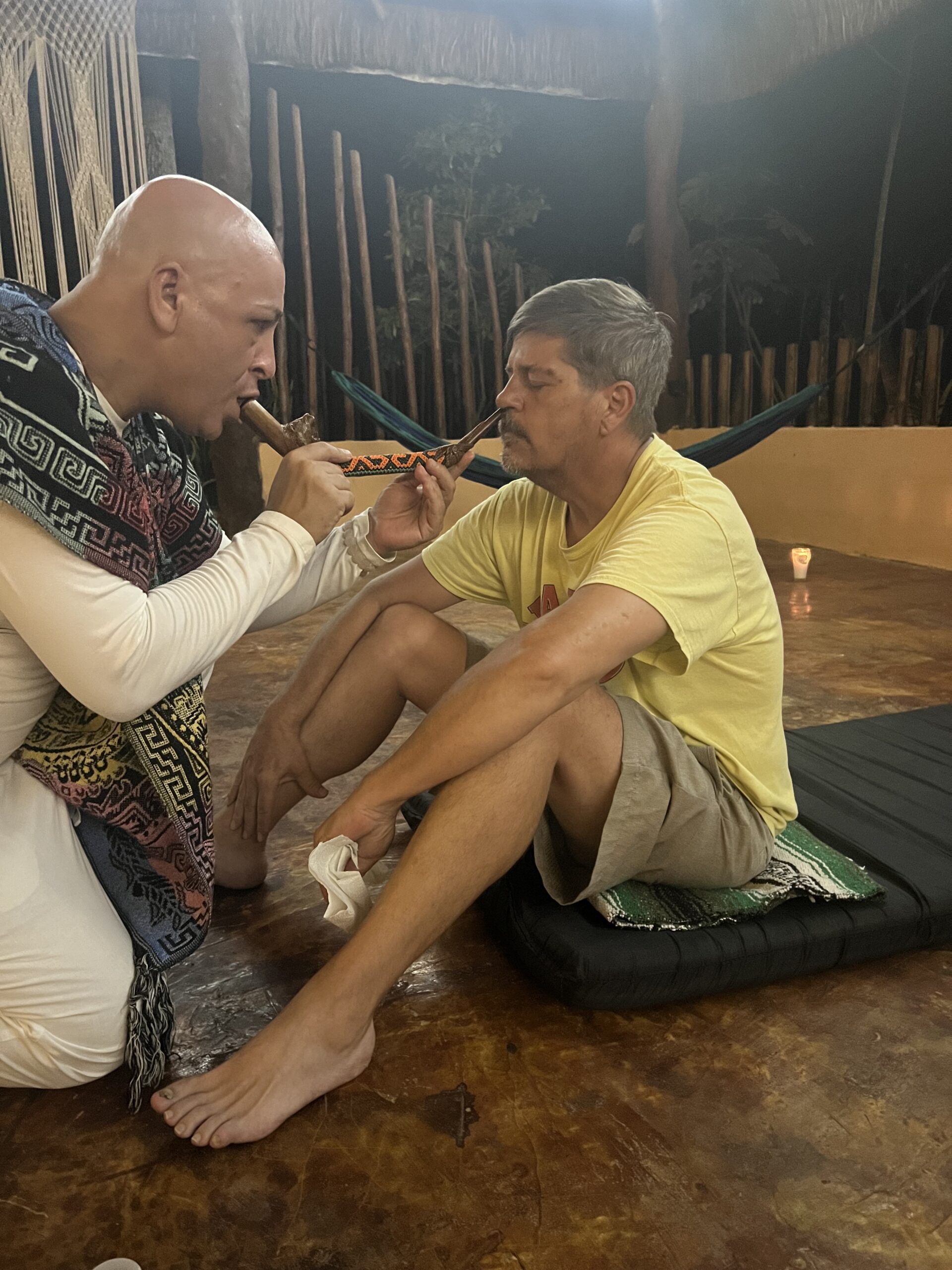
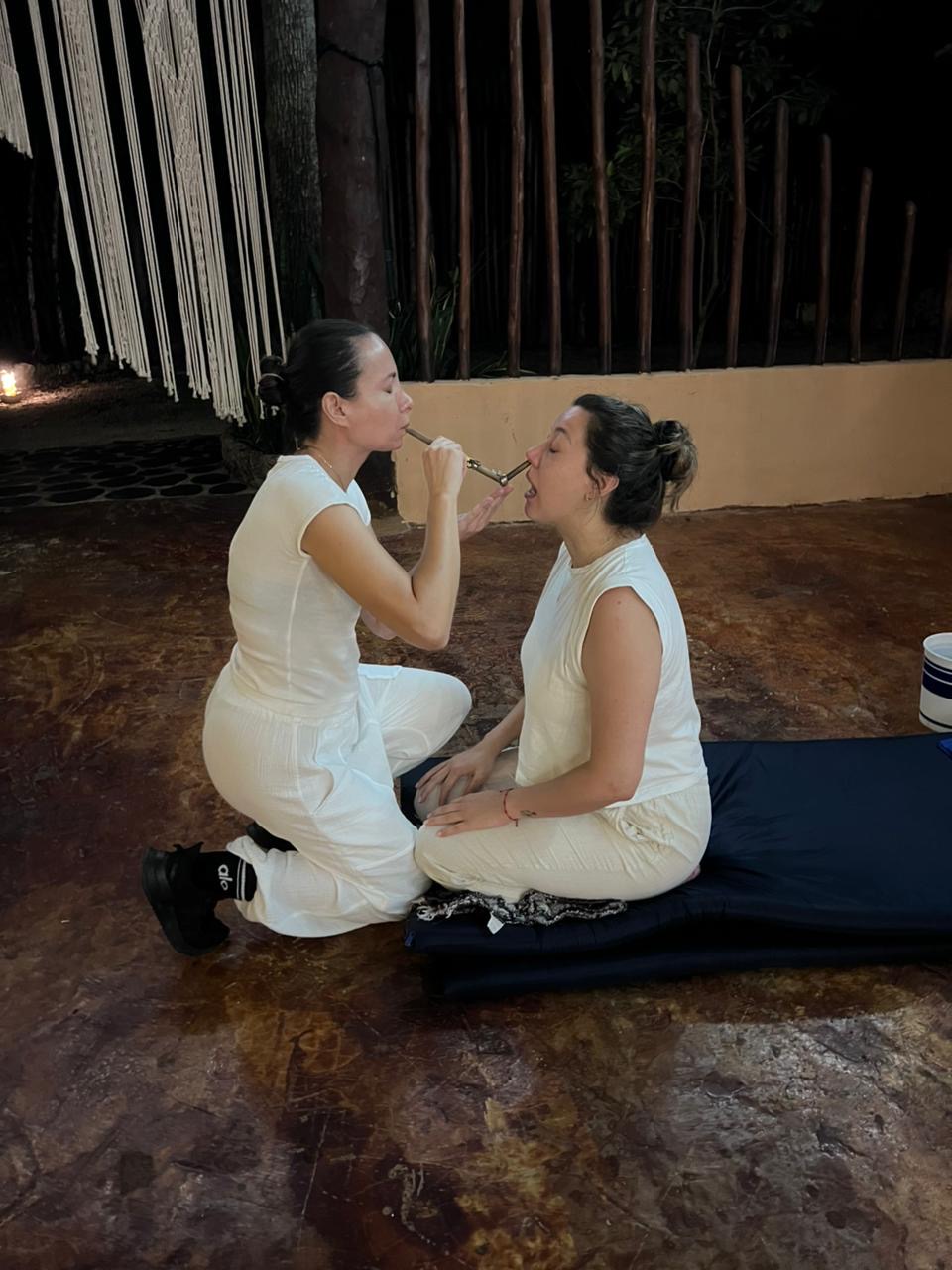
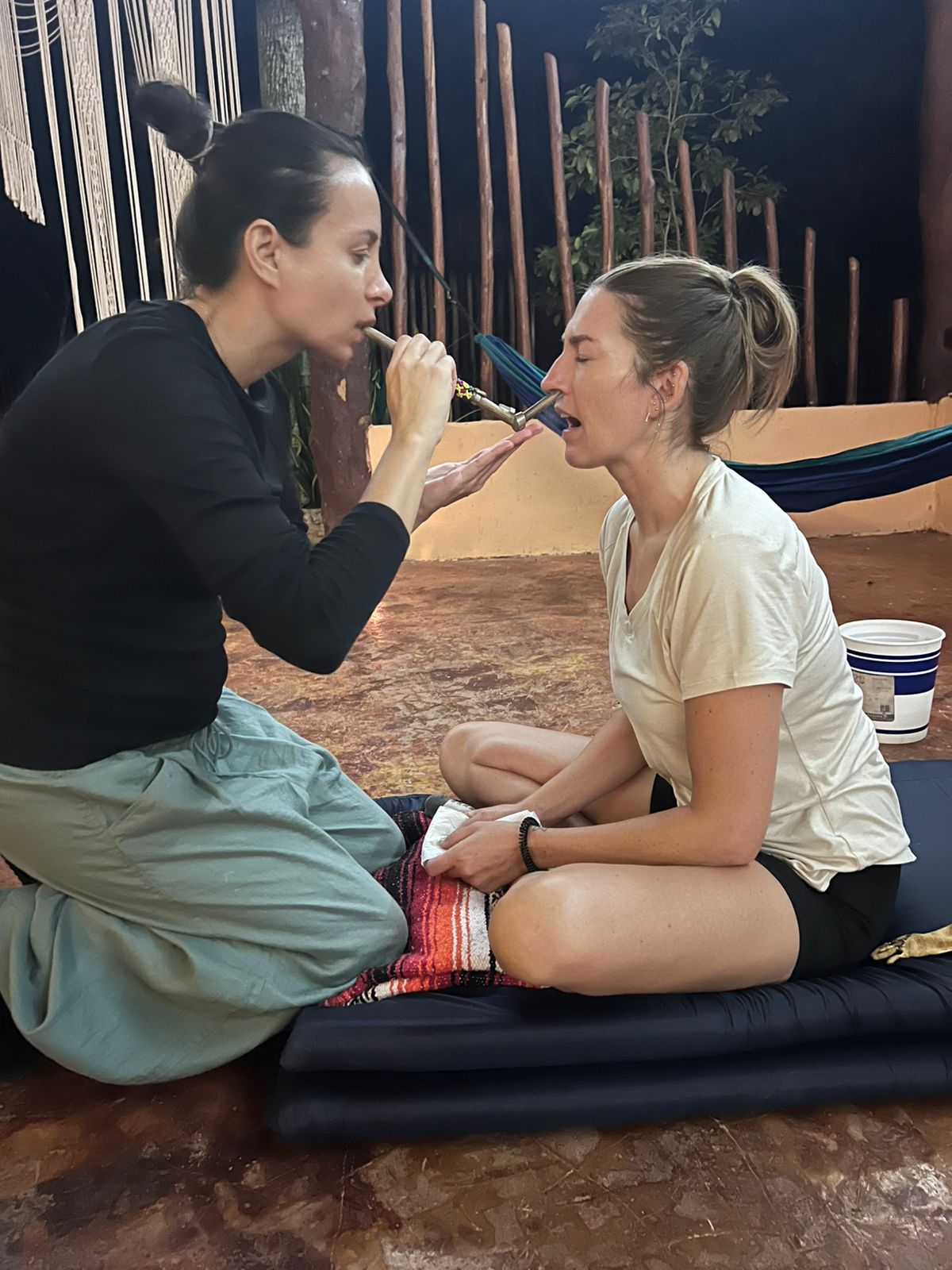
Rapé is traditionally administered into the nostrils using a special tube.
A tool known as a Tepi is used when one person administers the preparation to another.
A Kuripe is a tool used for self-administration.
In some traditions, the ceremony may be accompanied by prayer, singing, silence, or focused attention.
Personal intention may be an important part of the experience.
A person may approach the ceremony with a desire for stillness, inner reflection, or a moment of prayer.
Practices differ between traditions.
Rapé can produce pronounced physical sensations because it contains biologically active compounds, including nicotine.
For this reason, it is important to approach the practice with respect, awareness, and an understanding of personal boundaries.
Rapé as an Invitation to the Present Moment
Much of our lives takes place within the mind.
We think about what happened in the past.
We imagine what might happen in the future.
We search for answers.
We try to predict situations and control their outcomes.
Sometimes we do not even realize how much energy we give to events that are not happening in the present moment.
The mind can create stories that we begin to believe.
And the body may respond as though those stories were real.
This is where an important part of spiritual self-discovery begins.
We learn to recognize the difference between what is actually happening and what the mind is creating.
We learn to observe our thoughts without needing to identify with every one of them.
We learn to recognize our emotions without allowing them to automatically direct our actions.
Within a ceremonial setting, Rapé may remind some people of the importance of returning to the present moment.
However, the ability to remain present can also be developed through meditation, conscious breathing, and daily practice.
Inner stillness does not mean that the mind stops thinking. It means learning to listen to what exists beyond its thoughts.
The Mind, Ego, and Inner Freedom
Throughout life, we develop an idea of who we are.
Our personality is shaped by experiences, relationships, beliefs, and memories.
Gradually, we learn to respond in certain ways.
Some responses help us.
Others may keep us within repeating patterns.
We may constantly expect rejection.
We may feel the need to control circumstances.
Or we may become so identified with fear that we begin to experience the world primarily through it.
In spiritual practice, the goal is not necessarily to eliminate the ego.
The ego is part of our human experience.
What may be more important is learning to observe it.
Recognizing when we respond from fear.
When we act automatically.
And when we have an opportunity to choose a more conscious response.
Freedom does not necessarily mean never experiencing fear again. It may mean learning to recognize fear without giving it control over our lives.
Prayer, Surrender, and Trust
Prayer holds deep meaning in many spiritual traditions.
It does not have to be only a request for something we wish to receive.
It may also be an expression of gratitude, humility, and trust.
Within our personal spiritual approach, we recognize an important difference between belief and trust.
Believing in God may mean believing that God exists.
Trusting God may mean learning to truly live that belief.
Even when we do not know what tomorrow will bring.
When we do not have answers to every question.
Or when life does not unfold according to our expectations.
For us, surrender does not mean abandoning responsibility.
It means learning to accept what is present while continuing to act consciously, with love and respect.
Within this spiritual understanding, a Rapé ceremony may offer an opportunity for silence, prayer, and an honest encounter with ourselves.
Because trust is not simply an idea we hold about life. It is a way of learning to experience life itself.
Rapé, Conscious Breathing, and Connection With the Body
Our bodies are inseparable from our experiences.
Emotions may be reflected in our breathing, posture, and physical tension.
When we feel afraid, we may experience tightness.
When we are stressed, our breathing may become shallow.
When we feel safe, it may become easier to relax.
Conscious body awareness helps us recognize these connections.
Through meditation, gentle yoga, and observing the breath, we can gradually learn to become more present within our bodies.
At Healing Ceremonies Mexico, we consider this connection an important part of spiritual integration.
We believe that profound understanding does not have to remain only an idea.
It can gradually become part of how we breathe, respond, communicate, and live.
Our bodies are not obstacles on the spiritual path. They are natural and important companions on the journey.
Rapé and Ayahuasca Ceremonies
In certain Amazonian and contemporary ceremonial traditions, tobacco is used in connection with other plant medicines.
Rapé may be part of prayer, an opening intention, or a moment of concentration.
At Healing Ceremonies Mexico, we view it as a complementary ceremonial practice.
It is not the central purpose of a retreat or a necessary part of spiritual development.
Every person arrives with their own journey, experiences, and needs.
We believe that a profound spiritual experience does not depend on the number of medicines used.
Sometimes the most meaningful part of the entire process may be silence, meditation, or an honest conversation.
At the same time, tobacco-containing Rapé has the physiological effects of nicotine, so its use alongside ayahuasca requires particular medical caution.
Respect for the Medicine and the Body
Traditional use does not mean that Rapé is suitable for everyone.
Tobacco-containing blends may have high nicotine concentrations. Nicotine is addictive and can affect blood pressure and heart function.
Particular caution is important for people with cardiovascular conditions, during pregnancy, and in certain other health circumstances.
Before considering use, it is important to assess personal health, medications, and the ingredients of the specific preparation.
For us, respecting a medicine also means respecting the body and its boundaries.
The spiritual path is not a competition in how much intensity we can endure.
Sometimes genuine inner wisdom is expressed through the decision not to participate in a particular experience.
Integration – When Spiritual Understanding Becomes Part of Life
For us, integration is one of the most important aspects of the spiritual journey.
During meditation or a ceremony, we may experience deep stillness, insight, or a new perspective on life.
But what happens when we return to everyday reality?
When responsibilities arise.
When fear appears.
When someone says something that triggers an old reaction.
These are the moments when true integration begins.
We learn to observe ourselves.
To recognize automatic reactions.
To notice what is happening in the body.
And gradually to make more conscious choices.
The goal is not to become a perfect person.
It is to remain willing to know ourselves more deeply and take responsibility for our lives.
True transformation is not measured only by what we experience during a ceremony, but also by how our understanding gradually becomes reflected in everyday actions.
Our Approach to Rapé at Healing Ceremonies Mexico
Healing Ceremonies Mexico is located in a private jungle setting near Puerto Morelos and Cancún, Mexico.
Our work is rooted in respect for traditional medicines, personal spiritual experience, and the belief that genuine growth continues beyond the ceremony.
We view Rapé as one of the complementary ceremonial practices that may be associated with prayer, personal intention, and conscious presence.
Stanley – Traditional Medicines and Ceremonial Experience
Stanley has been working with plant and traditional medicines for many years.
An important part of his journey involved studying in the Peruvian Amazon near Pucallpa, where he gained experience under the guidance of a traditional healer, or curandero.
He later continued his learning and experience in Mexico, including work with Bufo Alvarius and sacred mushrooms.
His journey also included studying traditional Amazonian ceremonial songs, known as ícaros, under the guidance of a shaman.
These experiences shaped his approach to ceremonial work and his respect for each participant’s individual journey.
Irena – Kundalini Yoga, Conscious Presence & Integration
For Irena, working with plant medicines became part of a profound personal and spiritual transformation.
Her journey gradually led her toward a deeper understanding of the relationship between the mind, emotions, and physical body.
She completed Level 1 Kundalini Yoga teacher training through the KRI system.
Through meditation, gentle yoga practices, conscious breathing, and body awareness, she supports participants in developing a deeper relationship with themselves.
An important part of her approach is integration — the process of exploring how meaningful experiences can become part of everyday life.
Our Shared Philosophy
We believe that the true spiritual path is not about constantly seeking new and more intense experiences.
It is about learning to live more consciously.
Recognizing our reactions.
Listening to our bodies.
Taking responsibility for our actions.
And gradually developing greater trust, humility, and presence.
Our intention is to create space for self-exploration, personal reflection, and integration.
Because true inner peace does not arise when the world around us stops changing. It develops as we learn to remain present even in the midst of change.
With love and respect,
Irena & Stanley
Healing Ceremonies Mexico