



Xanga (Changa) – Consciousness, Body Awareness & the Journey Within
Exploring the connection between the body, emotions, consciousness, and spiritual self-discovery
There are moments when our attention turns away from the outside world and toward the deeper layers of our own consciousness.
Sometimes these experiences involve visions, colors, or extraordinary perceptions. At other times, there may be no visions at all.
Instead, a person may become deeply aware of their physical body, emotions, memories, or inner connections that previously remained unnoticed.
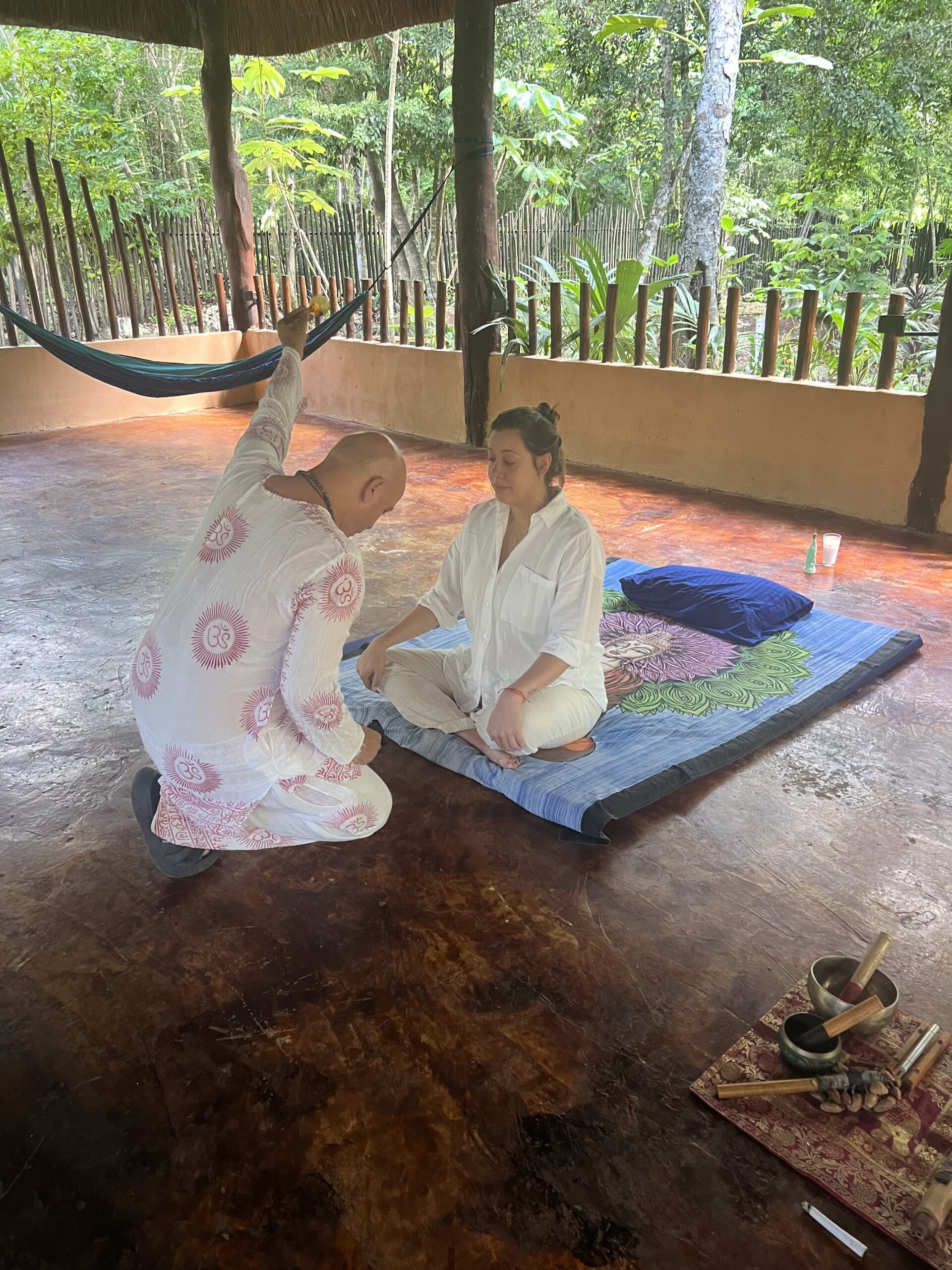
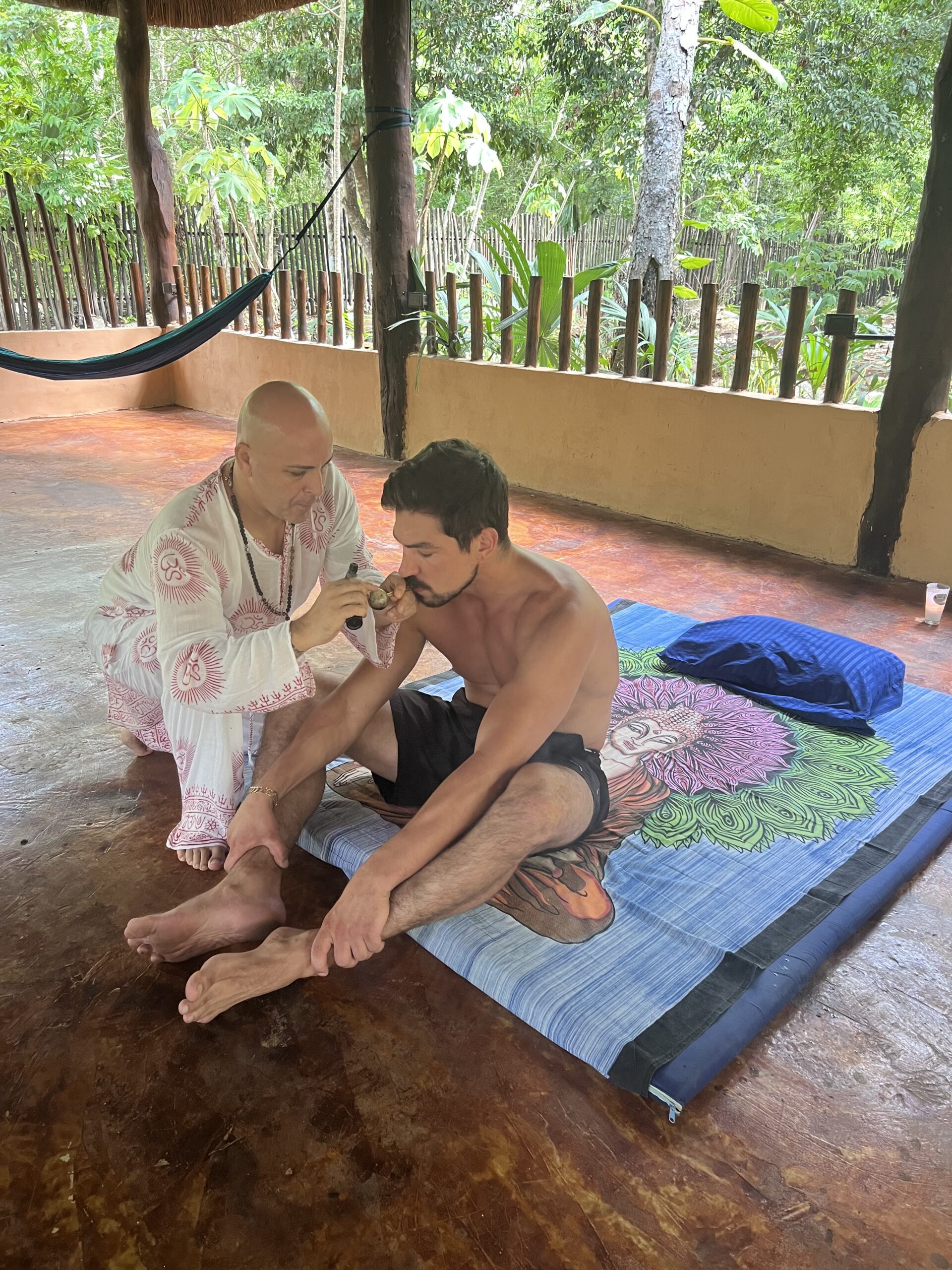
Xanga, also known as Changa, is a psychoactive herbal blend containing DMT. In some contemporary ceremonial settings, it is approached as part of spiritual exploration and personal self-discovery.
At Healing Ceremonies Mexico, we approach this medicine with respect, humility, and an understanding that every individual experiences altered states of consciousness differently.
For us, the depth of an experience is not measured by the number of visions someone encounters or by its intensity.
What matters more is what a person may come to understand about themselves and how that understanding becomes part of everyday life.
What Is Xanga (Changa)?
Xanga is a name used in some parts of Mexico for a smoked herbal blend containing DMT, commonly known as Changa.
DMT, or N,N-dimethyltryptamine, is a powerful psychedelic compound found in certain plants.
Changa generally consists of a herbal base infused with DMT. Some preparations also contain plants with harmala alkaloids, such as Banisteriopsis caapi, which can influence the nature and duration of the experience.
However, the exact composition of these blends varies.
Unlike ayahuasca, which has a long history of use within certain Amazonian traditions, Changa as a specific preparation is a relatively modern development.
Its contemporary ceremonial use may draw inspiration from different spiritual traditions, but it should not be presented as an ancient Amazonian ritual.
How Is Xanga Different From Ayahuasca and Bufo Alvarius?
Although these medicines may appear in similar spiritual environments, they are not the same substances and do not necessarily produce similar experiences.
Ayahuasca is a traditional Amazonian plant brew, commonly prepared with Banisteriopsis caapi and DMT-containing plants. Its effects may last several hours.
Xanga (Changa) is a smoked herbal blend containing DMT. Its effects generally begin rapidly and are considerably shorter than those of ayahuasca, although the experience can still be extremely intense.
Bufo Alvarius refers to a preparation associated with the secretion of the Incilius alvarius toad, which primarily contains 5-MeO-DMT. This is a different substance from DMT and may produce substantially different experiences.
None of these experiences is automatically deeper, more spiritual, or more meaningful than another.
Each person responds differently, and intensity alone does not determine the value of an experience.
Xanga and the Connection Between Body, Emotions, and Consciousness
One of the most meaningful aspects of our personal and ceremonial experiences with Xanga has been the relationship between consciousness, emotions, and the physical body.
Many people imagine psychedelic experiences primarily as journeys filled with extraordinary visions.
But not every profound experience comes through images.
Sometimes awareness turns directly toward the body.
A person may become more conscious of particular areas of the body, physical tension, emotions, or sensations that normally remain in the background of everyday life.
Memories, symbolic images, or intuitive insights may arise.
Sometimes there is a feeling that previously disconnected parts of one’s life suddenly begin to make sense.
Like placing the final piece into a puzzle and seeing the whole picture for the first time.
Such moments may carry deep personal meaning.
At the same time, they deserve thoughtful reflection. A powerful inner experience does not necessarily represent a literal memory or an objective explanation of past events.
When the Body Begins to Tell Its Story
Our bodies are part of everything we experience.
Joy, fear, sadness, tension, and love are not experienced only through thoughts.
They also have a physical dimension.
Sometimes we notice that particular emotions are accompanied by sensations in the throat, chest, abdomen, or other areas of the body.
In spiritual traditions, different areas of the body are often associated with symbolic meanings.
For example, in yogic philosophy, the throat is associated with Vishuddha chakra, traditionally connected with communication, truth, and self-expression.
This symbolism may invite deeper questions:
Am I able to express what I truly feel?
Do I listen to my body?
Do I allow myself to experience emotions I once tried to suppress?
Can I remain truthful with myself?
We see these questions as invitations to self-exploration, not as proof that a particular physical sensation must have a specific emotional or spiritual cause.
Xanga and Experiences of Emotional Disconnection
After difficult life experiences, some people describe feeling disconnected from their emotions or physical bodies.
In psychology, this may sometimes be associated with dissociation, which can function as a protective response to overwhelming experiences.
Some shamanic traditions also describe symbolic concepts such as soul loss.
These perspectives are not identical, but both may invite reflection on what it means to reconnect with oneself.
During our ceremonial work, we have met participants who described a greater awareness of their bodies and emotions following experiences with Xanga.
Some had previously experienced abuse or other deeply challenging life events.
Their personal reflections have been meaningful to us.
However, these experiences do not establish Xanga as a treatment for trauma. Intense psychedelic states may also be overwhelming or destabilizing, particularly for people with traumatic histories.
We therefore believe that personal boundaries, emotional safety, and thoughtful integration are essential considerations in any profound inner experience.
Masculine and Feminine Principles – Discovering Inner Balance
Many spiritual traditions explore the symbolism of two complementary principles.
In certain Tantric philosophies, Shiva represents pure consciousness, while Shakti represents the creative energy through which life manifests.
Symbolically, they can be understood as consciousness and its expression in the physical world.
Neither principle is inherently superior to the other.
Both are inseparable aspects of a greater whole.
Within ourselves, we may recognize qualities traditionally associated with both principles: strength and receptivity, determination and sensitivity, action and stillness.
Sometimes our spiritual journey invites us to examine our relationship with these qualities.
We may begin exploring our experiences of authority, control, trust, personal power, or surrender.
We may also recognize how our understanding of masculine and feminine energy has been influenced by personal history, family relationships, or cultural expectations.
True balance does not necessarily mean allowing one aspect of ourselves to dominate another.
It may mean learning to recognize and accept both.
Surrender Is Not the Loss of Personal Freedom
Surrender is a recurring theme in spiritual practice.
It is often discussed in relation to meditation, prayer, and altered states of consciousness.
But what does surrender truly mean?
From our perspective, spiritual surrender does not require giving up personal freedom, dignity, or the ability to make decisions about one’s own life.
It does not mean submitting to another person.
Instead, it may mean becoming more open to the present moment, allowing ourselves to acknowledge what we feel, and developing a deeper sense of trust in life.
For some people, this trust is connected with God.
For others, it may be connected with nature, consciousness, or their personal spiritual path.
This brings us to an important question:
Can we open ourselves to life without abandoning ourselves?
We believe that spiritual growth does not have to diminish personal strength.
It can help us recognize our own truth more clearly.
Does Every Spiritual Experience Involve Visions?
No.
Some people report vivid visual phenomena during DMT experiences, including colors, geometric patterns, and altered perceptions of space and time.
Others describe intense emotions, bodily sensations, or changes in their sense of self.
Sometimes there is a profound sense of stillness.
Sometimes a feeling of connection.
And sometimes an experience may be uncomfortable, confusing, or difficult to interpret.
The absence of visions does not make an experience less meaningful.
Likewise, having visions does not automatically indicate spiritual progress.
Our intention is not to pursue a particular altered state.
It is to encourage greater awareness, authenticity, and personal responsibility in everyday life.
Xanga at Healing Ceremonies Mexico
At our private retreat center surrounded by nature near Puerto Morelos, Mexico, we approach each medicine individually.
Xanga is not a standard part of our publicly advertised retreat programs.
However, it remains part of our ceremonial practice in certain individual circumstances.
Through our experiences, we have learned that people do not respond to every medicine in the same way.
Some participants find personal meaning in ayahuasca experiences.
Others describe meaningful experiences with Bufo Alvarius.
And some report different forms of inner awareness through Xanga.
We do not consider Xanga a universal alternative or an appropriate experience for everyone.
Our intention is not to create the most intense possible experience.
We aim to provide a space for conscious self-exploration, respect for individual needs, and meaningful integration.
Meditation, Kundalini yoga, personal conversations, time in nature, and reflection are also important elements of our approach.
Safety and Responsible Approach
Xanga contains DMT, a powerful psychoactive substance whose effects can be unpredictable.
If a blend also contains plants with MAO-inhibiting compounds, serious interactions with certain medications and other psychoactive substances may occur.
Particular caution is necessary for individuals with psychiatric conditions, cardiovascular concerns, medication use, or a history of trauma.
Combining different medicines should never be assumed to be safe.
Participation must always be voluntary and based on accurate information about medical history, medications, and potential risks. Health-related questions require consultation with a qualified medical professional.
Xanga is not a substitute for medical or psychological care.
Integration – When the Experience Continues Into Everyday Life
We believe the true value of a spiritual experience is not determined solely by what happens during a ceremony.
It becomes visible in how we live afterward.
Can we listen more deeply to our bodies?
Can we recognize our emotions?
Can we express our truth?
Can we create healthier relationships?
Can we trust life while remaining responsible for our own choices?
Sometimes an experience brings a clear insight.
At other times, it leaves us with a question that takes time to understand.
We do not need to interpret everything immediately.
Some insights reveal their meaning only as we begin to integrate them into our everyday lives.
The Journey Back to Ourselves
The spiritual path does not always lead beyond the physical world.
Sometimes it leads us toward a deeper acceptance of our human experience.
Toward the body.
Toward our emotions.
Toward our own truth.
Toward the understanding that we do not have to abandon ourselves in order to trust something greater.
Sometimes we are not searching for another world. We are searching for the way back to ourselves.
Healing Ceremonies Mexico – a space for conscious self-discovery, spiritual growth, and integration in the heart of the Mexican jungle.